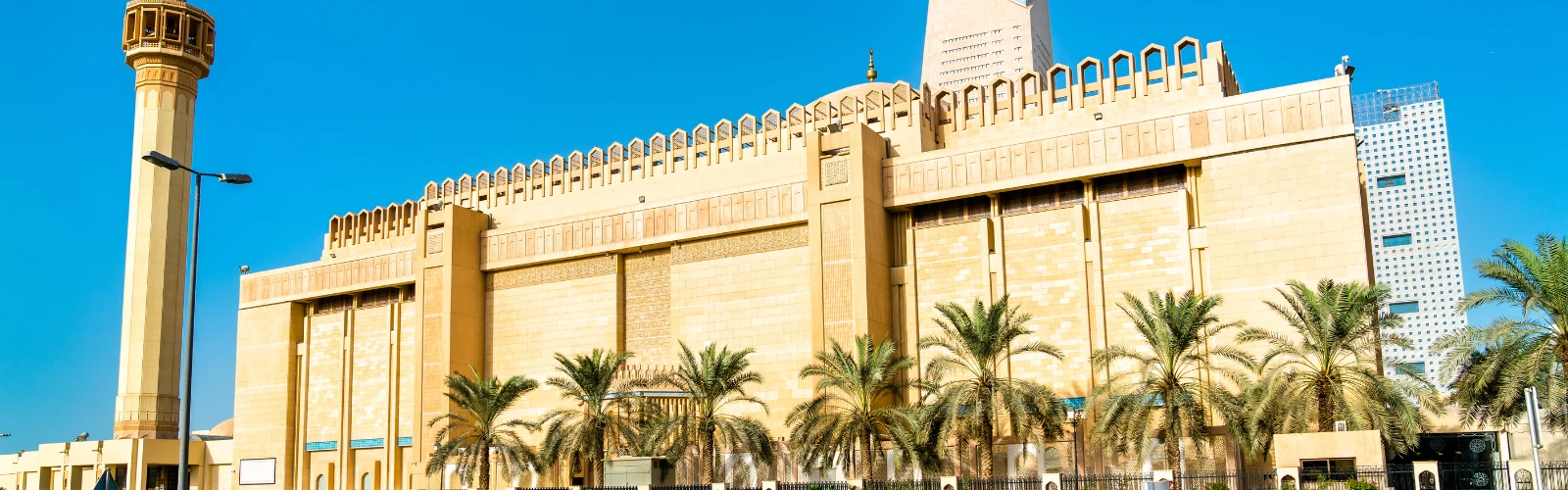
Exploring the Grand Mosque of Kuwait

In the center of Kuwait City, surrounded by government buildings and modern skyscrapers, one grand structure stands tall in quiet dignity — Grand Mosque of Kuwait. Whether you’re drawn to the intricate beauty of Islamic architecture or simply curious about Kuwait’s spiritual heart, this mosque offers a warm welcome and a peaceful pause from the busy city life.
You don’t need to be religious to appreciate the mosque’s stunning details or the sense of calm that fills the space. Visitors often describe the experience as moving, reflective, and surprisingly personal. From the soaring dome to the smallest mosaic tile, every corner of this place tells a story — one deeply rooted in Kuwait’s cultural identity.
Let’s take a closer look at what makes this sacred spot so special.
A Symbol of Devotion and Design
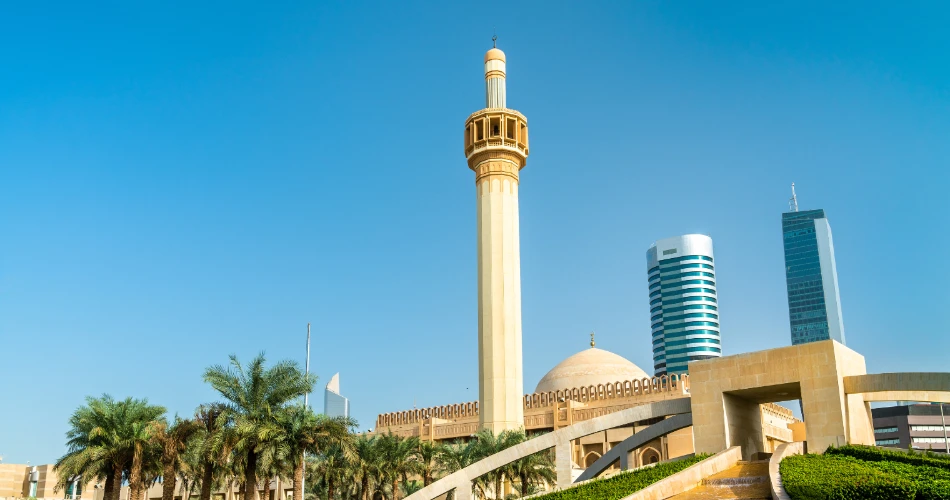
Built in 1986, the Grand Mosque Kuwait is more than just the largest mosque in the country. It’s a living symbol of Kuwaiti faith, tradition, and architectural ambition. With room for over 10,000 worshippers, the mosque reflects a deep sense of reverence for both spiritual practice and design.
Step through its main entrance, and you’re immediately greeted by high arches, warm lighting, and a sense of balance in every line and curve. The central prayer hall is topped with a majestic dome — rising 43 meters high — that draws your eyes upward and encourages quiet reflection.
Inside, the interior design blends traditional Islamic motifs with subtle modern touches. Geometric patterns dance across the carpets, calligraphy wraps around the walls, and stained glass windows gently filter the light. It’s not flashy or overwhelming. Instead, it feels serene — like the space was built to help people slow down and breathe.
Transitioning from the main hall to the outer courtyard, the change in light and texture feels intentional. Smooth marble underfoot and the open sky above create a peaceful contrast that invites you to pause. Whether you stay for a moment or a while, the experience is immersive without being demanding.
Cultural Heart of Al Asimah
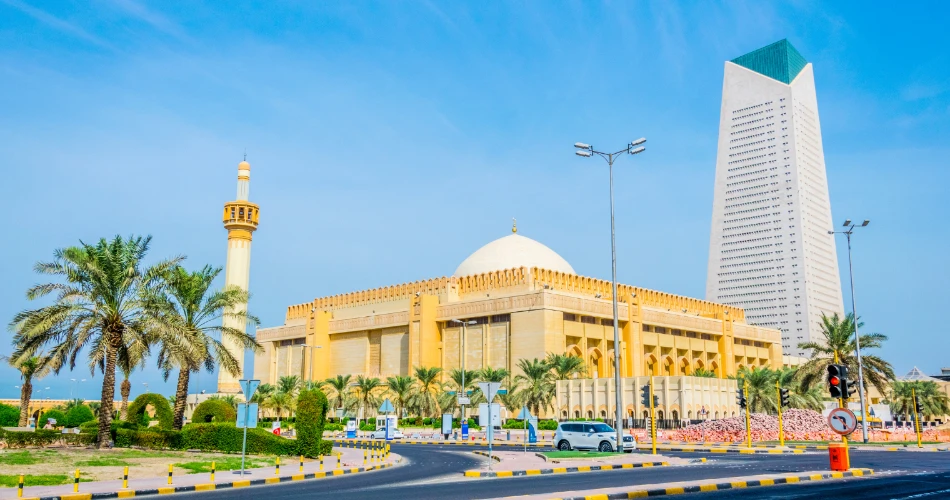
The Grand Mosque sits right in Al Asimah Governorate, which serves as both Kuwait’s capital region and its cultural core. While the mosque itself is a place of worship, it also stands proudly among Kuwait’s most important cultural landmarks.
From outside, its tan stone and blue-tiled dome offer a stunning contrast against the sleek buildings nearby. This blend of old and new reminds you that Kuwait’s modern growth hasn’t erased its rich spiritual roots — it’s built upon them.
Because of its central location, many people include the mosque as a calm counterpoint to busier activities in the area. After exploring museums or waterfront spaces nearby, visitors often find themselves drawn back here — not for a grand show, but for the sense of peace it provides.
And even if you’re not Kuwaiti or Muslim, you’re still welcome. The mosque offers guided tours led by friendly staff who not only explain the building’s design but also share insights into Islamic practices and Kuwaiti traditions. These conversations often feel more like warm chats than formal lectures — and that’s what makes them memorable.
It’s one of those religious sites in Al Asimah that encourages connection rather than distance. You don’t just learn facts; you get to ask questions, hear personal stories, and leave feeling more rooted in the human side of history.
Moments of Stillness and Story
While its scale is impressive, what truly sets the Grand Mosque Kuwait apart are the quieter details — those moments when you notice how architecture, faith, and daily life gently overlap.
Take the library, for instance. Tucked inside the mosque’s complex, this space holds religious texts, historical documents, and resources for scholars. But it also welcomes everyday visitors who simply want to learn more or reflect quietly. It’s yet another example of how the mosque supports both faith and curiosity.
Then there’s the mihrab — a small, beautifully designed niche in the wall that indicates the direction of Mecca. Its detail is subtle but rich, with delicate carvings that catch the light at different angles. You might miss it if you rush, but slowing down reveals its grace.
Even the walkways and courtyards seem designed to encourage mindfulness. With every step, you’re invited to notice what’s around you — the shape of a column, the soft hum of prayer, the hush of wind against stone.
These elements come together to make the mosque not just a destination, but an experience. It’s a place where stories linger — not just in the design, but in the way people move through the space. Some come for prayer, others for reflection. And still others come just to feel the presence of something timeless.
A Living Connection to Faith and Heritage
Though it’s open to visitors year-round, the Grand Mosque becomes especially vibrant during Ramadan. The community energy is powerful — with thousands gathering for evening prayers, Quran recitations, and nightly meals after fasting. The atmosphere is one of celebration and unity, with a generosity that radiates far beyond the walls.
But even outside of special occasions, the mosque continues to serve as a vital part of Kuwaiti life. Locals come here not only to pray, but also to mark milestones, seek quiet during tough times, or simply reconnect with their values.
And for travelers, that’s what makes visiting the Grand Mosque Kuwait so rewarding. It’s not about ticking a landmark off your list. It’s about witnessing a living, breathing space — one that plays an active role in shaping the cultural rhythms of the city.
In many ways, this is one of the few religious sites in Al Asimah that feels both deeply rooted and completely open. The lines between local and visitor fade away, replaced by a shared appreciation for beauty, belief, and calm.
Whether you stay for twenty minutes or an entire afternoon, the experience tends to stay with you — not in a loud or dramatic way, but quietly, like a small thread tied to your memory.
The Grand Mosque isn’t just about impressive domes or polished marble. It’s about the way Islamic architecture in Kuwait invites stillness. It’s about the way tradition continues to thrive, even as the world speeds up around it. And most of all, it’s about the open-hearted welcome it offers — regardless of where you’re from or what you believe.
So, next time you find yourself in Kuwait City, consider stepping through its quiet gates. You might come for the architecture, but chances are, you’ll leave with something more.
